
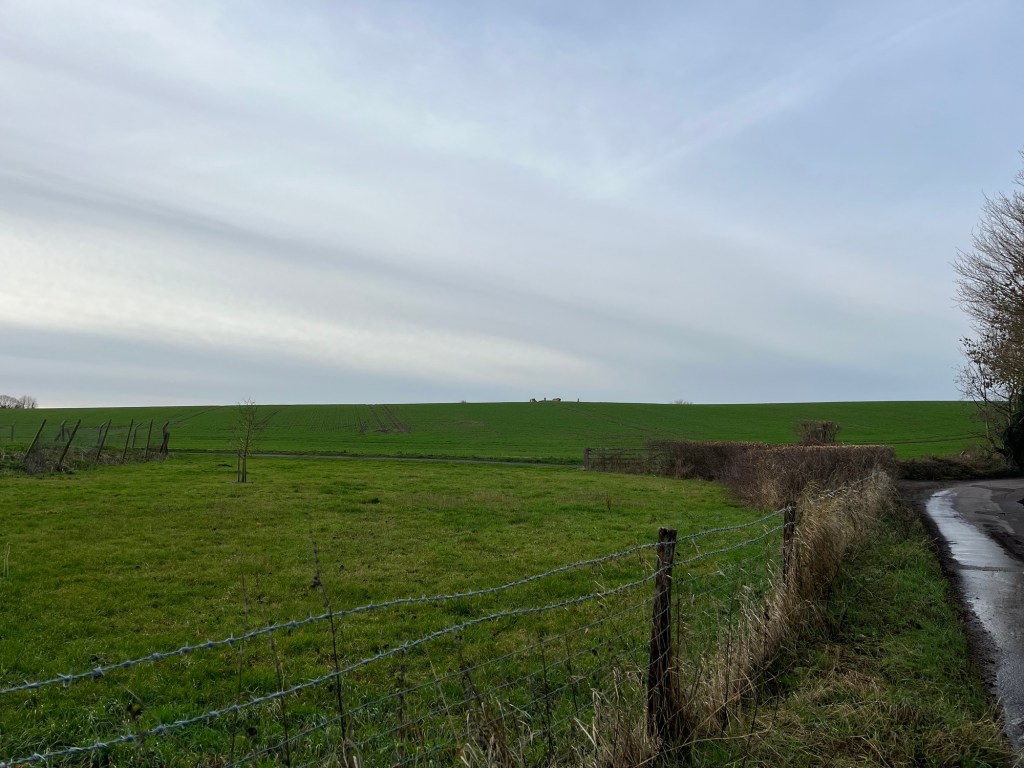
I have wandered far from that ring-giver and would not renegue on this migrant solitude. I have seen halls in flames, hearts in cinders, the benches filled and emptied, the circles ofFrom Seamus Heaney’s prose poem The Wanderer
companions called and broken. That day I was a rich young man, who could tell you now of flittings, night-vigils, let-downs, women’s cried-out eyes.
Chairman of the bored
‘I’m bored!’ Why does time seem to drag when you are young and yet scoot by when you are old? One hypothesis is that the supply of new things dwindles with age. Boredom occurs as cognitive dissonance between novel sensations, for those lucky enough to take novelty for granted. Over time, the distance between these sensations lengthens, until eventually novelty becomes such a rare commodity that when it does come along you don’t want to let go. Boredom becomes the norm, and as such is emptied of its meaning and gives way to something else: nostalgia.
Artists aim to capture and transfigure this flow of still new material. When he was doing the round of interviews at the time of publication of his last novel, Martin Amis suggested that if you had not produced a masterpiece by your mid- to late-30s you might as well pack up your pretensions and leave. So, by implication, the artist is a young man; because that is when her energetic mind is flooded by stimuli and experiences still new, albeit with gradually diminishing returns.
Adrift, alone
The 115-line poem The Wanderer, which survives in the anthology known as the Exeter Book dating from the late 10th century, sits within a genre of Old English poetry that explores the pain of loss and the transitory (laene) nature of life.
Oft ic sceolde ana uhtna gehwylce [Always I must alone each morning]
mine ceare cwiþan. [(of) my sorrows speak]
‘The Wanderer’ title was only assigned to the poem in the mid-19th century when it was realised to be separate from the preceding work in the Exeter codex. The subject is introduced by the narrator as anhaga (lonely one), and later referred to as eardstapa (earth-stepper – this may be translated as wanderer), modcearig (sad-hearted one) and finally snottor on mode (the one wise in heart). J.R.R. Tolkein agitated unsuccessfully for an alternative title.
Anhaga is composed of an – one – and haga – enclosure. Haga gives us the Modern English ‘hedge’. It is cognate with the Old English verb for to think hecgan, which has the pleasing notion that you think by closing off from your mind other distractions. In this etymological light, the anhaga’s wandering can be seen as that of the mind rather than of the body.
Like The Seafarer, another Exeter Book elegy about the transitory, the Wanderer is adrift at sea, though likely only figuratively so. The sea infuses the Anglo-Saxon imagination as a metaphor for abandonment, exile, aimless drifting, apiece with the folk memories of the sea-borne migration of their ancestors in centuries past. In Beowulf, the hero is also at one point referred to as anhaga, when he had to flee a battle with the Frisians which had cost the lives of his lord and uncle and his companions: he swam home alone carrying thirty coats of mail.
Over the decades following the Norman Conquest, the compact structure of Anglo-Saxon poetry vanished together with the language’s grammatical complexity and much of its vocabulary. It was a language intended for speaking and was only preserved in writing thanks to the conscientiousness and intellectual curiosity of the monks of the 10th and 11th centuries. The reader feels the undulation of this unique poetic metre. Individual thoughts rise and fall with each half-line (ofer waþema gebind), and across the caesurae in between they seem to hover briefly in empty space. The dedication to alliteration rather than rhyme sustains individual waves of thought for a time, and the choice of consonant defines the mood of the passage.
Winter’s woe
The Wanderer dwells in nostalgia, a neo-Latinate term that merges the Greek words for pain (algos) and sad longing to return home (nostos). Nostalgia is an 18th century neologism invented to convey the German Heimweh. Weh is cognate with woe and wail (wā, wǣlan, in Old English). The poem abounds with of ‘w’ alliteration:
wraþra wælsleahta, winemæga hryre: [fierce slaughters, fall of kinsmen]
Ne mæg werig mod wyrde wiðstondan, [the weary heart cannot defy destiny]
wod wintercearig ofer waþema gebind, [waded as desolute as winter over commingling waves]
warað hine wræclast, nales wunden gold [the path of an exile holds him, not at all twisted gold]
forþon ne mæg weorþan wis wer, ær he age
wintra dæl in woruldrice [therefore a man cannot become wise until he has [his] share of winters in the earthly kingdom]
þonne ealre þisse worulde wela weste stondeð, [when all this worldly wealth lies waste]
winde biwaune weallas stondaþ [by wind blown upon, the walls stand]
Woriað þa winsalo, waldend licgað [the walls totter, the lords lie]
weal wundrum heah, wyrmlicum fah [a wall wondrously high, decorated with serpents]
wintres woma, þonne won cymeð, [winter’s tumult, then darkness comes]
What is the object of the Wanderer’s Heimweh/ nostalgia? In the cold Germanic north of Europe, with its warring, seafaring migrating tribes, the hall is the place of sanctuary, repose, mead-swilling, gift-giving and merry-making. The great hall of the half-Danes, Heorot, is savagely violated by the monster Grendel in Beowulf. Life is compared by the counsellor of the King of Northumbria to a sparrow’s accidental flight through a hall in the winter. The Wanderer is sele-dreorig – sad for (loss of) hall. He bewails the loss of his lord and treasure-giver, and various other accoutrements like the ‘bright cup’ (beorht bune) whose contemporary importance we can only imagine.
See I told you so
Scholars are split on whether the text contains one or several voices. There is a discernibly moralising tone in the introductory and concluding lines. So the poem could be a unified example of wisdom literature like the book of Ecclesiastes whose message is that that everything in this earthly realm is meaningless, nothing endures, so you might as well believe in the eternal God. The manuscript only survives in the Exeter Book which was likely assembled during the scholarly frenzy cultivated by Archbishop Dunstan at the end of the 10th century. The ‘core’ of the poem itself is clearly older, containing Old Norse terms such as hrimcealde (ice-cold). Its plausible that the eager monks felt entitled to add a ‘top and tail’ which, though acknowledging the nobility of a pagan muse, insisted that its main value was to vindicate the Gospel message.
Even without the topping and tailing, however, the poet meanders through the stages of grief, contextualising and cancelling the sentiments which by the end of the poem are themselves already lost in time. Think of it as a reversal of Krapp’s Last Tape by Samuel Beckett, wherein the old sod is drawn to listening to recordings of his younger naïve self, seeking in vain to recover the hope of his youth. If it has more than voice, then the poem is less solitary wandering and more polyphonous screenplay. So I prefer to envision the single anhaga, moping dolefully along the path to grim lucidity.
At first the language is clipped, half lines brief: the Wanderer is utterly alone.
Nis nu cwicra nan [There is no one alive]
þe ic him modsefan minne durre [to whom I dare (the feelings of) my heart]
sweotule asecgan. [clearly speak]
He recognises that it is customary to keep his innermost thoughts (referred to by means of kennings ferðloca, ‘spirit chest’, and hordcofan, ‘treasure-cove’) to himself. He then unfolds his sorrow at the memory of loss of his lord, whom he himself had to bury in the earth, and his companions.
Wyn eal gedreas! [All joy has perished!]
Is it better to recall what, in hindsight, we project to have been a happy past, or rather to not to have the sorry memory at all?
Cearo bið geniwad [care is renewed]
þam þe sendan sceal swiþe geneahhe [for the one that must send over so often]
ofer waþema gebind werigne sefan. [over the commingling waves a weary soul]
It is comparable to the tragedy of Dante’s Francesca di Rimini:
…. Nessun maggior dolore
che ricordarsi del tempo felice
ne la miseria….
[There is no greater pain than in misery to remember happy times.]
Since then he has been at sea, hallucinating the past. Sleep and grief lead him to imagine his lord is still there; he dreams of embracing him, resting his hands and head on his knee, only to wake up and find himself surrounded by icy waves, preening sea birds, snow and hail. It all recalls the desolation of Thomas Hardy’s grief at his wife’s death in ‘The Voice’:
Thus I; faltering forward,
Leaves around me falling,
Wind oozing thin through the thorn from norward,
And the woman calling.
Hardy’s poem is closer in spirit to the Old English Wanderer than W H Auden’s cover version. From the opening line – ‘Doom is dark and deeper than any sea-dingle’ – Auden powerfully evokes and harnesses early middle English metre and alliteration. But while the anhaga wanders because he has lost everything, Auden’s narrator has himself chosen to wander off from wife and home.
This is wisdom
The poet then shifts gear. With a Forþon (Therefore) he moves to explain that this is wisdom: to understand that all is fallen. Humanity’s paraphernalia, which like Shelley’s statue of Ozymandias, you falsely believed to last forever, all collapse around you,
Woriað þa winsalo, waldend licgað
dreame bidrorene, duguþ eal gecrong, [of joy deprived, the whole troop fell]
…
eald enta geweorc idlu stodon. [the ancient work of giants idle stood]
The Wanderer now having attained wisdom launches into a series of lamentations at the disappearance of all his erstwhile objects of desire, the horses, treasure, nice drinking vessels, etc. and ends by accepting the transitoriness of money, friends, man, kinsman, everything.
Hwaer cwom mearg? …
Eala þeodnes þrym ! …
Her bið feoh læne, her bið freond læne,
her bið mon læne, her bið mæg læne,
I am passing out
Artists try their best to string out the moments they do not want to lose. Wagner’s ‘Tristan chord’ torments the listener with double dissonances that at once gratify and demand a resolution which is always just out of reach.
The Beatles’ A Day in The Life, the last track on the Sgt Pepper album, ends with an orchestra progressing from the lowest to the highest note, before the band simultaneously hammer an E-major chord onto three pianos which is boosted to faders by the sound engineer to create a note that lasted 42 seconds. Vinyl listeners are then treated to an eternal recursion of Paul saying something daft backwards until they can be bothered to lift the needle away.
Joyce’s Finnegans Wake, itself an alliterative elegy to lonely meandering and loss, ends where it begins, begins where it ends; in the sea .(I quote extensively, for lack of an editor, because it’s so beautiful.)
Loonely in me loneness. For all their faults. I am passing out. O bitter ending! I’ll slip away before they’re up. They’ll never see. Nor know. Nor miss me. And it’s old and old it’s sad and old it’s sad and weary I go back to you, my cold father, my cold mad father, my cold mad feary father, till the near sight of the mere size of him, the moyles and moyles of it, moananoaning, makes me seasilt saltsick and I rush, my only, into your arms. I see them rising! Save me from those therrble prongs! Two more. Onetwo moremens more. So. Avelaval. My leaves have drifted from me. All. But one clings still. I’ll bear it on me. To remind me of. Lff! So soft this morning, ours. Yes. Carry me along, taddy, like you done through the toy fair! If I seen him bearing down on me now under whitespread wings like he’d come from Arkangels, I sink I’d die down over his feet, humbly dumbly, only to washup. Yes, tid. There’s where. First. We pass through grass behush the bush to. Whish! A gull. Gulls. Far calls. Coming, far! End here. Us then. Finn, again! Take. Bussoftlhee, mememormee! Till thous-endsthee. Lps. The keys to. Given! A way a lone a last a loved a long the
‘Thys transytory life’
The best efforts to preserve the moment either eventually exhaust themselves or fabricate an infinite loop. No wonder then that since 1549 the Church of England’s Book of Common Prayer has contained an intercession on behalf of everyone having a hard time in this world:
And we most humbly beseche thee of thy goodnes (O Lorde) to coumfort and succour all them, whyche in thys transytory life be in trouble, sorowe, nede, syckenes, or any other adversitie.
It is a concern that can be traced back to the closing admonition (probably) appended to travails of The Wanderer in the mists of the Anglo-Saxon world.
Bored children do not get Heimweh. With so much happening around them, they haven’t yet the wintra dæl in woruldrice required to look back sorely on what you once had, and likely never appreciated at the time. The Wanderer is the artist emerging from youth, cells in his body getting silently larger and less able to fix problems and imbalances, unable to recover the past, slowly being reconciled to a universe that will move on without you.


Leave a Reply