
And you’ll miss me more as the narrowing weeks wing by. Someday duly, oneday truly, twosday newly, till whensday.
James Joyce, Finnegans Wake
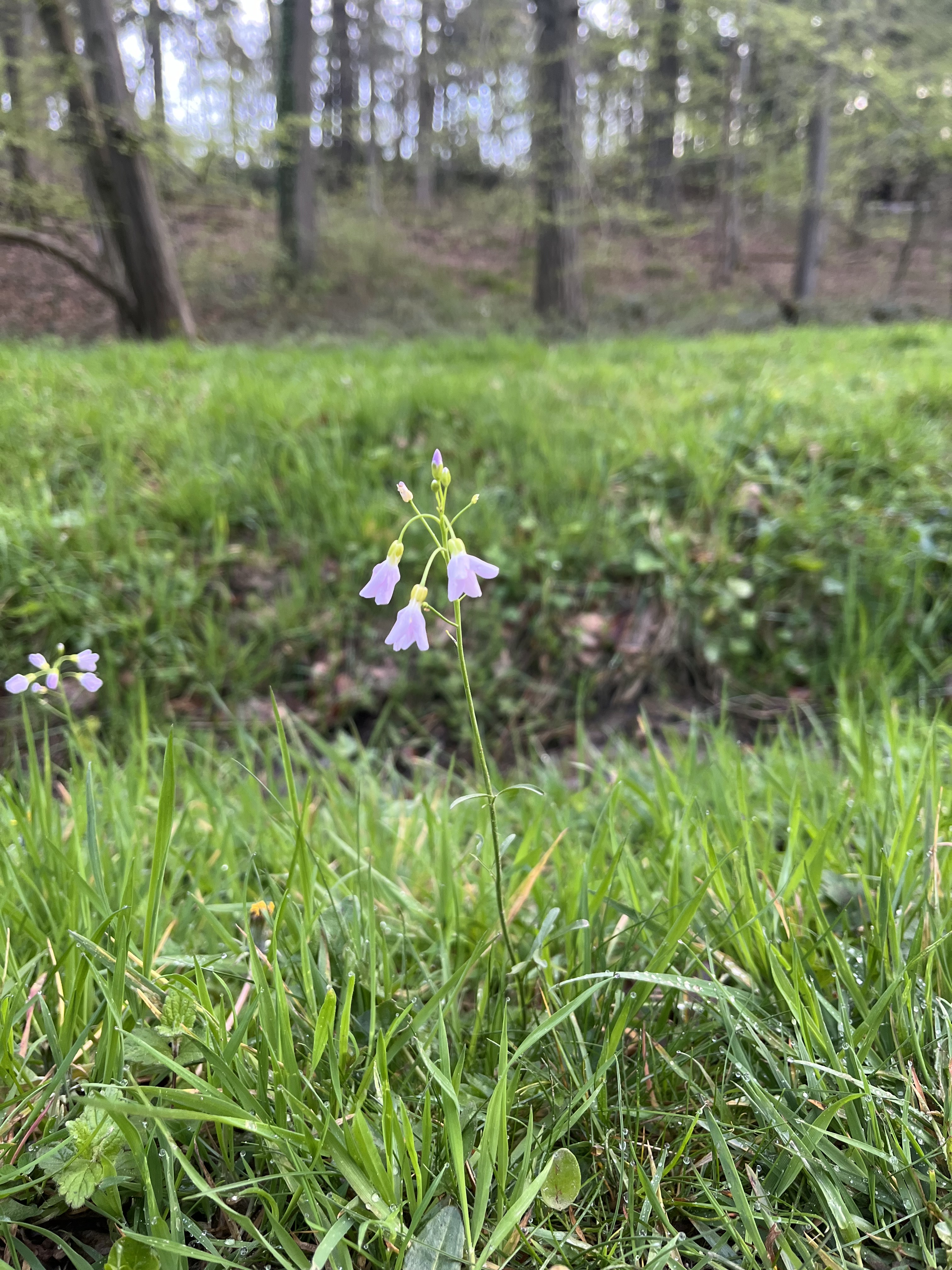
Nature, so hard at work all spring, now displays the results of its endeavours, and May Day offers a moment to admire them. Lady’s smocks with their pastel gossamer petals belilac the damp soil. Wild garlic, whose delicate, intense flowers plucked and eaten leave their taste for hours, like a lunch in Paris.
Birds are rearing their young for fledging in a few weeks’ time. It’s a brutal process, nature’s way, winnowing out the weak, some luckless enough to be swallowed alive in the nest by their stronger siblings, an efficient maximisation of scarce resources. Eventually, the parents will force them out to fend for themselves, probably never to see each other again. They are letting go.
(For humans, the experience of parenthood for humans and other mammals is a far slower burn. “Push me and let me go!” my daughter would say, in the days when I taught her to ride a bike.)
By the end of J. M. Coetzee’s Booker Prize winning novel, Disgrace, the protagonist, David, is living out his ignominious ostracism by helping to euthanise incurable or unwanted dogs and other animals. David had developed a bond of some affection with one of these unfortunate inmates, but with the final lines he resolves that there is no longer anything to be gained by preserving the life for even a week longer. ‘Yes, I am giving him up.’
In the Nunc Dimittis, Simeon is telling God to let him go, because he has seen the Messiah in the form of the infant Jesus, as the Holy Spirit had long before promised him. The Book of Common Prayer translates the first line as ‘Lord, now lettest Thou, thy servant depart in peace.’ Not only is the old man inviting God to let him go, he is himself letting go of his earthly existence. His eyes have at last beheld the treasure that he had been waiting for, living for, and now he is ready to go. It foreshadows the final moments of Jesus himself, when he takes one last drop of sour wine before pronouncing ‘It is finished’, and ‘gave up his Spirit’ (my italics).
The verb, ‘to let’ is an example of a contranym, one of those few words, like ‘sanction’ and ‘cleave’, that have strangely evolved to contain two contradictory meanings, even if the one is much more common than the other. The modern meaning of ‘to let’ that enjoys common currency is ‘to allow’, the rarer is ‘to obstruct’, and yet this was the sense of the Old English verb which it derives, lettan.
Lettan is cognate with ‘late’, so ‘to let’ is literally, in its ancient sense, to make late. (Dutch, that close cousin of English, has laat, for late, and laten – ‘to let’ conjugates to laat in the present singular.) A residue of the original meaning endures in legalese ‘without let or hindrance, and in squash, where a ‘let’ refers to a rally that breaks down due to interference, but it is vanishing rare otherwise.
Jacques Derrida made great play of another contranym, pharmakon, the inherently ambivalent Ancient Greek term meaning both medicine or poison, in his essay on Plato’s Phaedrus.
This pharmakon, this ‘medicine’, this philter, which acts as both remedy and poison, already introduces itself into the body of discourse with all its ambivalence. This charm, this spellbinding virtue, this power of fascination, can be – alternately or simultaneously, beneficent or maleficent.
‘There is no such thing as a harmless remedy,’ he continues. ‘The pharmakon can never be simply beneficial.’ First, because ‘the beneficial essence or virtue of a pharmakon does not prevent it from hurting’. Second, ‘because the pharmaceutical remedy is essentially harmful because it is artificial.’
Pharmakon has an additional meaning, that of scapegoat. In a particularly distressing scene in Coetzee’s Disgrace, a goat with infected balls is put out of its misery by Bev at the Animal Welfare Clinic, a precursor of the final giving up of the dog at end of the novel. The idea is that human care may simply be a case of terminating life, administering the pharmakon.
How might the artificial, harmful ‘medicine’ of ‘letting go’ play out in different power scenarios?
In one set of circumstances, when you let something go, you could be letting it go because it wants to go, it is attempting to go. Or it may not be agitating to go, but nevertheless you let it go, and in its new-found freedom, which it may not immediately want to explore, it may linger a while, perhaps plead for a time to be taken back, but eventually it will leave. When the possession of the object is objectively a bad or dangerous thing in the immediate or longer term, this is the noble and moral course of action. When you are not yourself in a position of power and you let go, that can be an act of self-preservation.
In another scenario, when you are in a position of power, and you let go of something in a weaker position than yours, knowing that letting go is in that object’s best interests whilst not yourself wanting to let go, that can also be a noble act of selfless love. On the other hand, when you are in a secure position of power and decide to let go of an object that does not want to be let go, that may have become inured, dependent, then this could amount to an abuse, an act of unfeeling cruelty, arbitrarily performed because you can. Equally, not to let go, when you are in such a position of power, may be because you feel your power under threat by a weaker party, that is also an abuse of power and an act of selfishness. The abuser of power attempts to subjugate the weaker party until the desire for power has been sated, and then lets go, which can be akin to an act of sadistic cruelty.
Coetzee’s protagonist, at the end of the novel, accepts that his suffering dog has to be put down. He decides to let him go, but this no pure act of selfless virtue. It contains the acceptance of fate and the urge to self-preservation, which conveniently now converges with the humane euthanasia of his pet, whose suffering can be ended through the intervention of human science.
By not letting go when love demands it, you ‘make late’ (lettan) through the refusal to surrender the moment which is in your possession. But, ultimately, even making late is nevertheless an eventual letting go, an allowing to be free, which is how the internal contradiction of ‘letting’, at once hindering and releasing, eventually, inevitably, resolves itself. This is perhaps the reason why the language has pivoted, now almost completely, over the course of the last millennium and a half, from one meaning to its very opposite.
After the letting go there remains a trace, but it is trace of an absence, like in the little poem by Jimenez about the butterfly, where ungraspable beauty leaves behind nothing but the imprint of its departure.
Mariposa de luz,
la belleza se va cuando yo llego
a su rosa.Corro, ciego, tras ella…
la medio cojo aquí y allá…¡Sólo queda en mi mano
la forma de su huída!
The beauty, the suffering as well as – in the words of Bertolt Brecht – the hope, all lie in the contradiction.
 ofthewedge
Leave a comment